Managed WiFi for every site, with AI as the infrastructure layer.
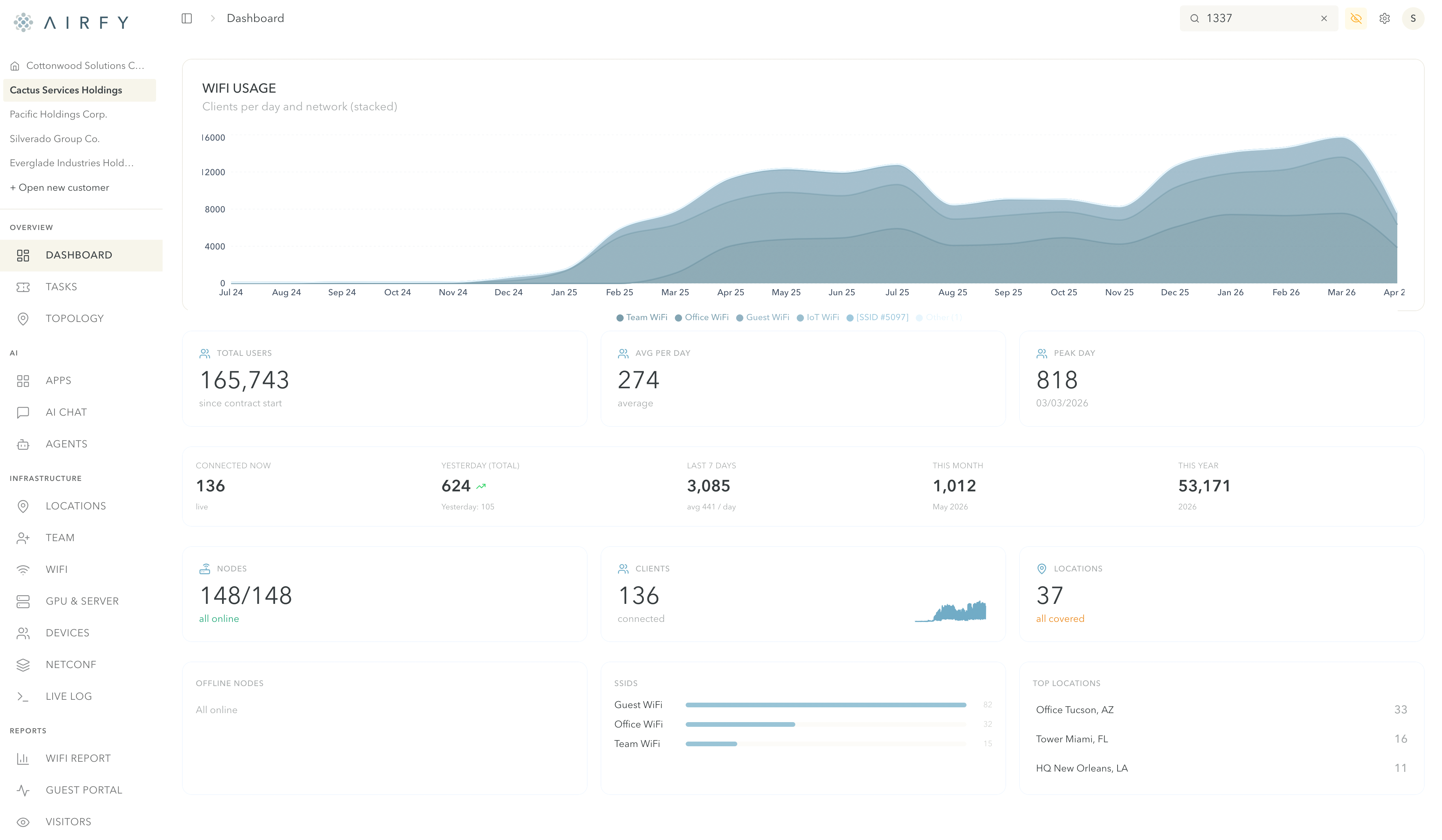
Airfy gives enterprise teams one control plane for locations, nodes, SSIDs, devices, firmware, support workflows, and AI automation across every office, store, campus, and production floor.
How do I learn AI and earn from it? How do I protect my kids and their future?
Two questions, one answer. Airfy AI Academy teaches families and businesses to use AI on their own infrastructure. The network is the foundation. Your kids inherit the operator side, not a black-box subscription.
Multi-site platform
Enterprise WiFi is many locations, many networks, and one operating layer.
Airfy treats AI as base infrastructure, not a chatbot feature. The platform understands sites, nodes, SSIDs, clients, firmware state, policies, and support context so every workflow can build on live network truth.
Every location
Group offices, stores, campuses, warehouses, and franchise sites into one operating model.
Every network
Staff WiFi, guest portals, POS, IoT, cameras, vendors, and executive networks stay segmented by policy.
Every node
Track firmware, health, uptime, clients, interference, and AI actions from fleet view down to one AP.
AI as base infrastructure
The assistant uses topology, telemetry, policy, and support history so enterprises can build workflows on top.
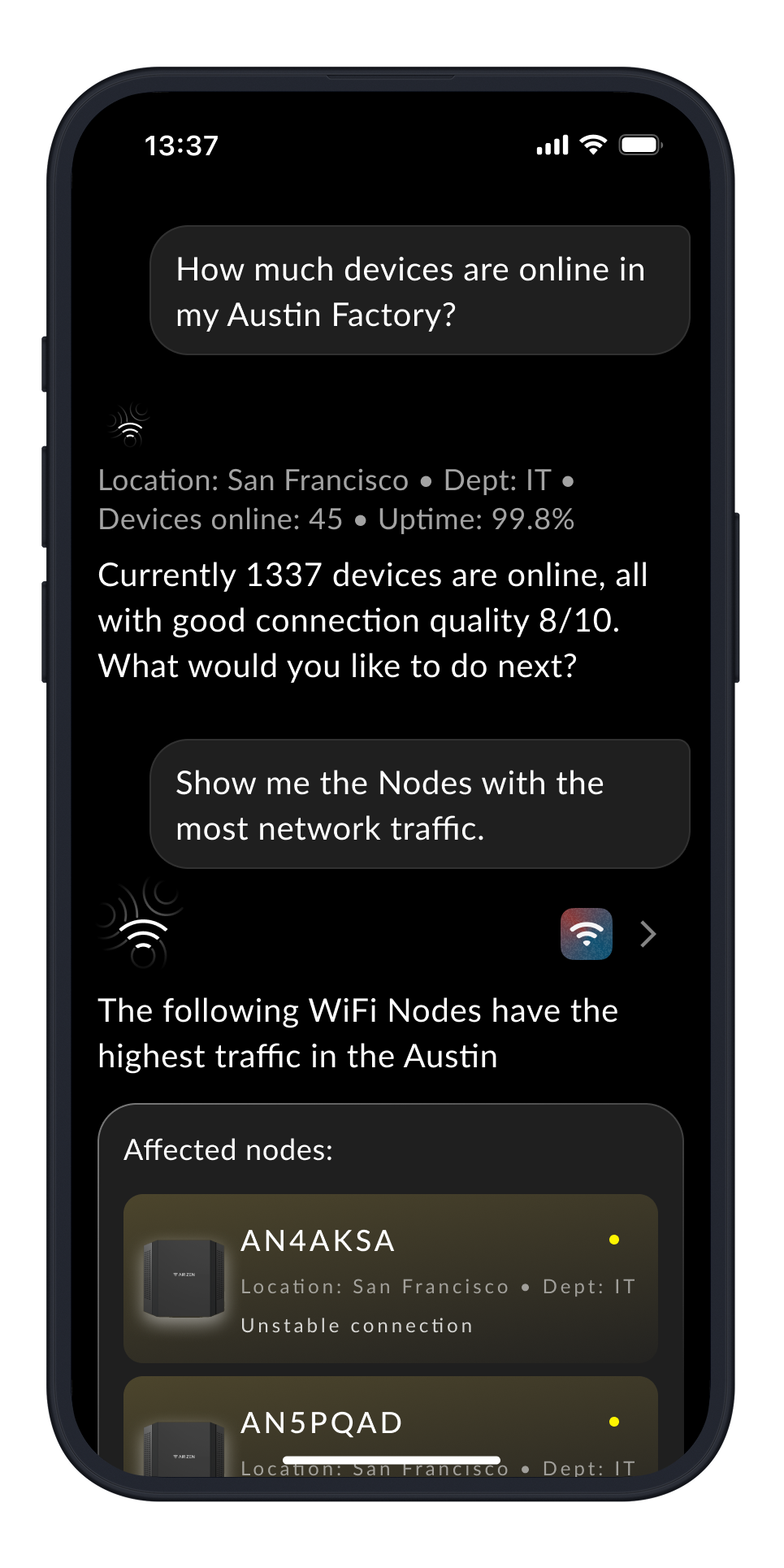
Talk to your network. Tell it what to do. Watch it work.
The operator console is voice-and-chat first. Three modes, one product surface. Your team stops switching tools and starts asking better questions.
Read
Voice or chat: 'how many devices are in Austin Factory?' The console answers with live numbers, the matching map, and the diagnostic context behind the question.
Talk to your company. Chat with your system.
Voice your question. Chat your idea. Query your knowledge. Every answer runs on the GPU you own, not on a vendor's cloud. The five Airfy AI products turn your operator network into a nervous system you can speak to.
Stop being training fodder for someone else's model. When you use Slack, your conversations train somebody else. When you use Airfy Chat on your own GPU, they do not.
See the AI PlatformMore than WiFi
The AI infrastructure layer for your business.
There are four layers in the AI stack: applications, models, infrastructure, silicon. Airfy lives in infrastructure. We sit between the silicon on your floor and the applications your team uses, and we make every device speak the same security policy.
Network
WiFi, switching, VPN mesh, branch-to-cloud. One fabric across every site.
Identity
Per-user passwords, per-device certificates. No shared secrets. Revoke in one click.
Access
Role-based segmentation. Guest, staff, POS, IoT, vendor. Each isolated by policy.
Voice
Microphones are now the most-protected device on the floor. We keep that traffic local.
Servers
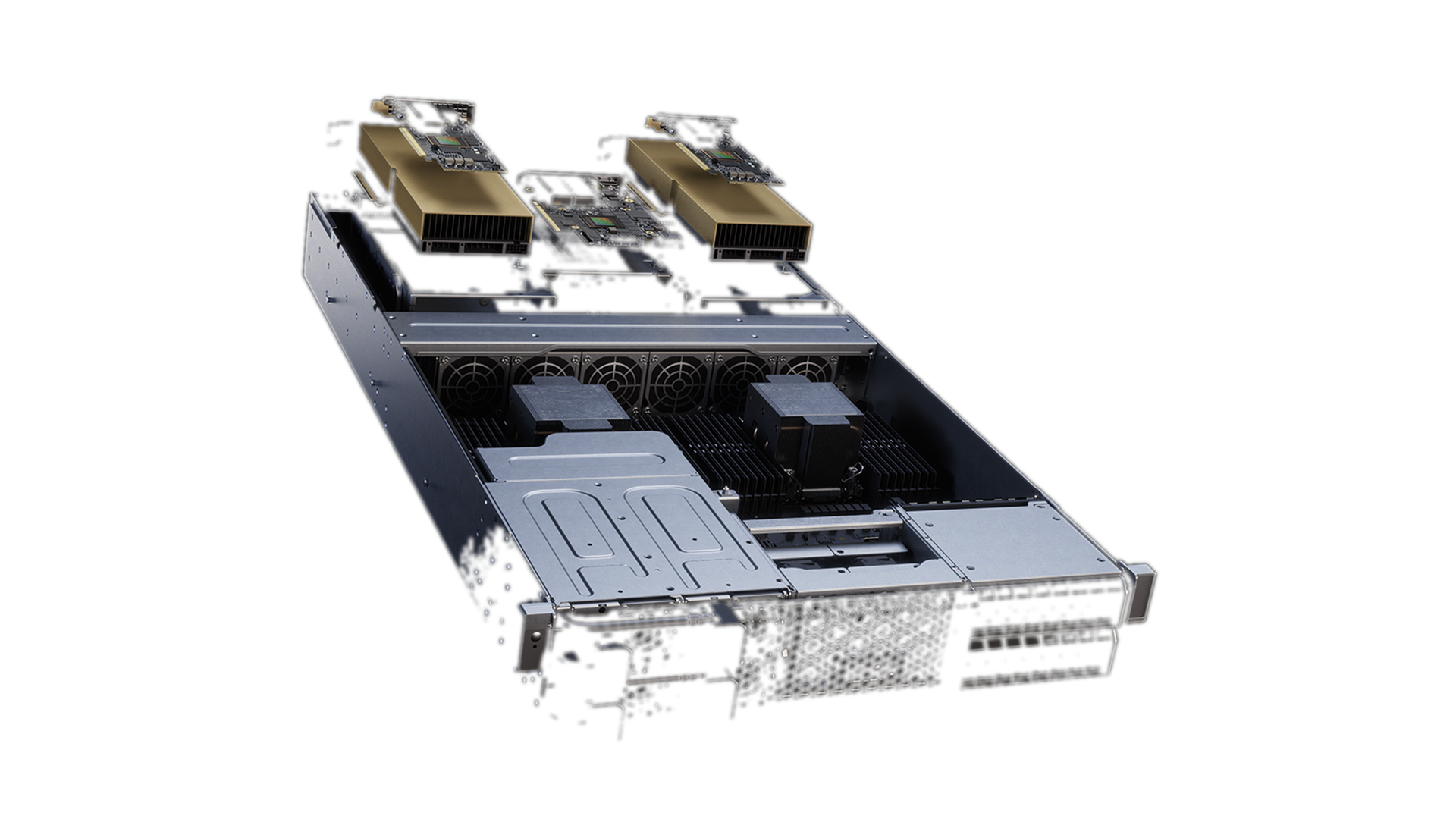
Local AI compute on the same hardware. Inference at the site, not in someone else's cloud.
Auditability
Linux-based releases with documented change history. Source availability is stated per released component.
Manufacturer mode
Your business already runs Linux. You just did not know.
The lobby speaker, the staff-kitchen appliance, the executive coffee machine, the cleaning robot. They all run Linux. Airfy frames supported devices as one policy surface where the hardware and deployment path make that possible.

Choose your country
Same software. Your jurisdiction.
Hardware built in the country that fits your regulator. The platform, firmware, and tooling are identical.
USA
US company. US deployment track.
US customers can scope hardware, software, data handling, and compliance evidence per deployment before rollout.
- US contracting path
- Deployment evidence pack
- Supply-chain review per deal
- Austin office context
Europe
Built in Portugal. EU data residency.
European deployments can be scoped around EU hosting, partner operations, and privacy requirements before rollout.
- EU hosting options
- Privacy review per deployment
- Evidence reporting
- Portugal operations context
Deployment evidence
Jurisdiction first, claim second.
Procurement teams need evidence, not slogans. For each deployment, Airfy scopes hardware origin, firmware provenance, hosting location, operational responsibility, and support model before the customer signs.
That keeps origin, privacy, and compliance claims tied to the actual rollout instead of turning them into unsupported site-wide promises.
The result is a cleaner buying path for regulated teams: the jurisdiction is explicit, the evidence is attached, and legal review happens before production.
Compliance
European standards in the EU. FCC in the US. Automated, not a checklist.
Same pipeline produces evidence for the regulator on either side of the Atlantic. You pick the report. The platform produces it. GDPR in Europe, FCC supply-chain attestations in the US, network-segmentation reports for everyone.

Encryption at rest and in transit
AES-256 on disk. TLS 1.3 on the wire. Hardware-accelerated where the silicon supports it.
Audit logs, retained and signed
Every config change, every admin action, every firmware update. Tamper-evident. 4+ years retention.
Role-based access control
Per-user permissions. SSO via SAML and OIDC. MFA enforced. No shared admin accounts.
Automated reporting
Resilience reports, FCC supply-chain attestations, network segmentation, PCI scope. One click each.
Deployment patterns
Offices, production halls, retail chains, public safety. One platform.
"Multi-site retail teams need network visibility, guest segmentation, and support handoff without adding another operational silo."
"Industrial sites need stable local networking, predictable policy, and diagnostics that survive messy physical environments."
"Campus and office teams need one console for SSIDs, clients, devices, and support workflows across locations."
Business WiFi FAQ
Talk to sales. Or learn the platform first.
Two paths. Sales gets your business scoped, priced, and migrated in four weeks. The AI Academy gets your team or partner certified to run it themselves.